


The 5 most beautiful canals in Amsterdam

When I hear about Amsterdam, one of the first things that come to mind are the canals. Over time I have come to appreciate more and more the historical and cultural importance of these waterways, which have been part of the UNESCO World Heritage since 2010. Their picturesque and romantic views have made many of my walks a unique experience. The canals are many, more than 160 to be precise. The sheer number does not make it easy to choose which ones are the most beautiful in the city, which ones you absolutely must see. After some deliberation I managed to make a small selection of five personal favorites. I hope you will see them all when you travel to Amsterdam!
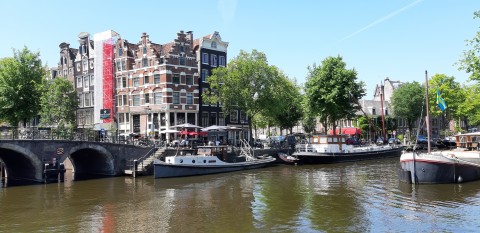
Brouwersgracht:
Beer anyone? Along the Brouwersgracht there were a series of breweries that constituted the "commercial center" of the city. Many of the breweries were in houses that still exist today. Those houses were in fact warehouses for cereal grains used to produce beer. Today the production has been moved elsewhere but in the area you can still order a beer in one of the famous local pubs that overlook this canal. Many Dutch people think that this is the most beautiful canal in the city: the Brouwersgracht even won a beauty contest organized by the newspaper "Het Parool". What do I like about this canal? The lovingly restored houses, the floating houses on both sides of the canal, the majestic trees, the bridges decorated with flower boxes and bicycles, and striking views of the intersections with the other main canals. It is definitely my favourite canal, especially in summer thanks to its enchanting colours.
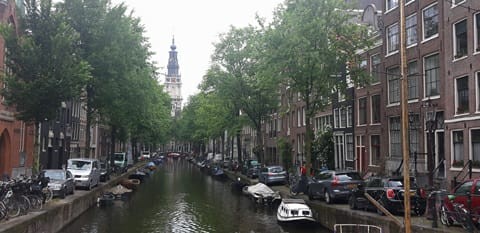
Groenburgwal:
This is a little pearl in the centre of the city. This inspiring point of the city is located between the Amstel, the Munt and the Stopera. The Groenburgwal is enriched by a cute characteristic drawbridge from which you can see the tower of the Zuiderkerk in the background. In spring and summer, you can admire the rich foliage of the trees on the sides of the canal. Once this area was the site of weaving factories where wool was washed, carded, and spun. Today, however, it is a romantic crossing: on the drawbridge one can find numerous lovelocks that symbolize the "forever" of lovers that passing by.
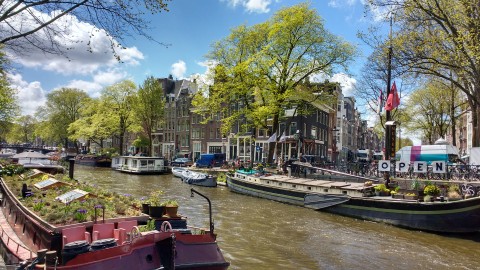
Prinsengracht:
When you visit Amsterdam, you cannot miss this canal. Today it is in fact one of the most popular in the Jordaan district and two very famous buildings overlook it: the Anne Frank House and the Westerkerk. Four centuries have passed since the construction of the canal and to this day it is still an area full of life: here you'll find offices, hotels, churches, cafes, restaurants, galleries, houses and houseboats. The houseboats here are something special, they're old merchant ships converted to particular urban dwellings. A cruise on this canal is almost a must when visiting Amsterdam. Floating in its waters, perhaps on a beautiful sunny day, is a real pleasure. If you want to see this bustling canal, do not miss Amsterdam during the famous King's Day parties (April 27) or during the Pride celebrations (every first Saturday of August).
Reguliersgracht:
The straight canal of Amsterdam! The Reguliersgracht is positioned perpendicular to the Amsterdam canal belt. It dates to the mid-seventeenth century and interconnects some of the main canals of the city. The arched bridge and the view of 7 almost identical bridges placed in a straight line certainly contribute to its charm. This is one of the most photographed spots in all of Amsterdam! The experience of passing this canal by boat in the evening, when the lights of the bridges cast shimmering reflections in the water is certainly spectacular.
Leidsegracht:
Another central canal of the city of Amsterdam. I found it particularly pleasant to go through on a colourful afternoon in autumn. However, it does not lose its charm even during winter. This year I was lucky enough to see its bridges covered with snow: a unique spectacle! In the evening, with the lights that decorate the arches of the bridges, especially at the intersection with the Keizersgracht, you can enjoy a quietly beautiful atmosphere. The Leidsegracht was dug in the second half of the seventeenth century and owes its name to the fact that it was initially crossed by boats that were headed for the city of Leiden.


Comments